
The EU’s latest anti-greenwashing measures represent one of the most significant changes to sustainability marketing in recent years. From September 2026, businesses operating in the EU will face much tighter controls on environmental claims, particularly generic green statements, offset-based carbon neutrality claims and unsupported sustainability promises.
For service businesses, the message is clear: every environmental claim should be specific, measurable and supported by evidence. Companies that can prove their sustainability performance will thrive; those relying on vague marketing slogans may face increasing legal and reputational risks.
Environmental claims have become a key part of marketing for many businesses. Whether promoting a service as “sustainable”, “carbon neutral”, “green” or “environmentally friendly”, organisations are increasingly using environmental credentials to attract customers. However, misleading or poorly substantiated claims can create confusion and undermine consumer trust.
To tackle this issue and give consumers greater confidence in sustainability claims, the European Union has introduced much stricter rules to tackle greenwashing. Businesses will need to rethink how they communicate environmental and sustainability claims.
What Has Changed Under the EU’s New Greenwashing Rules?
The most significant development is the EU’s Empowering Consumers for the Green Transition Directive (Directive (EU) 2024/825). Member States were required to transpose the directive into national law by 27 March 2026, with the new rules applying across the EU from 27 September 2026.
The directive amends existing consumer protection legislation and introduces specific prohibitions on misleading environmental marketing practices. The aim is to ensure that consumers can trust sustainability claims and make informed purchasing decisions.
It is important to note that while the proposed Green Claims Directive was withdrawn by the European Commission in 2025, the anti-greenwashing measures within the Empowering Consumers for the Green Transition Directive remain in place and will apply from September 2026.
Which Environmental Claims Are High Risk Under the New EU Rules?
The new rules specifically target several common marketing practices.
1. Generic Green Claims
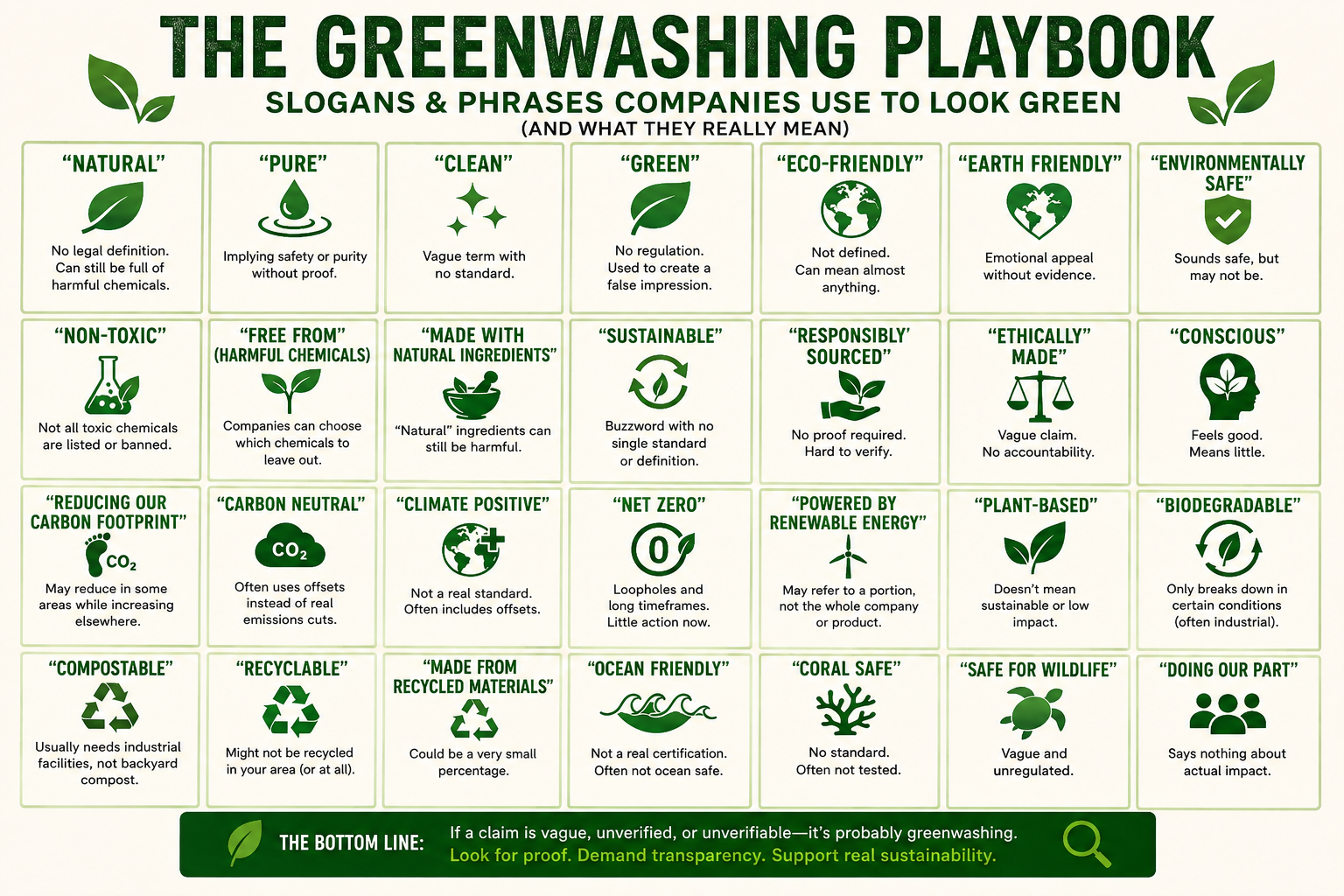
Businesses will face tighter restrictions on broad terms such as:
- “Eco-friendly”
- “Environmentally friendly”
- “Green”
- “Sustainable”
- “Nature friendly”
unless they can demonstrate recognised and outstanding environmental performance. Generic claims without robust evidence may be considered misleading.
2. Carbon Neutral and Climate Neutral Claims
One of the most significant changes is the restriction on claims such as:
- “Carbon Neutral”
- “CO₂ Neutral”
- “Climate Positive”
- “Net Zero Service”
where these claims rely primarily on carbon offsetting schemes rather than actual emissions reductions within the organisation’s operations and value chain. The EU has concluded that consumers can be misled when offsetting is presented as eliminating environmental impacts.
3. Self-Created Sustainability Labels
Businesses will no longer be free to create their own sustainability badges or environmental certification marks unless they are based on an approved certification scheme or established by public authorities.
4. Future Environmental Commitments
Claims such as:
- “Net Zero by 2030”
- “Carbon Free by 2035”
- “Sustainable Operations by 2040”
must be supported by a clear, realistic and publicly available implementation plan with measurable targets and regular monitoring. Ambitious promises without evidence will face increased scrutiny.
What Do the New Rules Mean for Service Businesses?
Many discussions around greenwashing focus on physical products, but the new rules are equally relevant for service providers.
Consultancies, law firms, engineering firms, facilities management companies, technology providers and professional services organisations frequently make sustainability claims in tenders, websites and marketing materials. These businesses should ensure that environmental statements are supported by clear and relevant evidence.
Examples of Potentially Risky Environmental Claims
- “We provide sustainable consultancy services.”
- “Our data centre audits are carbon neutral.”
- “We are an environmentally friendly company.”
- “Our services help create a greener future.”
These statements may be viewed as overly broad or insufficiently substantiated.
Examples of Better, Evidence-Based Environmental Claims
Instead, organisations can make specific, measurable claims such as:
- “Our ISO 50001 consultancy services help clients improve energy management systems.”
- “We reduced our Scope 1 and Scope 2 emissions by 35% between 2020 and 2025.”
- “100% of our purchased electricity comes from certified renewable energy contracts.”
- “Our environmental management system is certified to ISO 14001.”
Specific, evidence-based claims are more likely to withstand regulatory scrutiny.
What Should Businesses Do Now?
1. Audit Existing Marketing Materials
Review:
- Website content
- Brochures
- Tender responses
- Social media posts
- Sustainability reports
- Email marketing campaigns
Identify any vague environmental statements that lack supporting evidence.
2. Create a Green Claims Register
Maintain records showing:
- The claim being made
- Supporting data
- Calculation methodology
- Verification evidence
- Review dates
This creates an audit trail if regulators or customers challenge a claim.
3. Train Sales and Marketing Teams
Many greenwashing risks arise from well-intentioned but inaccurate marketing language. Staff should understand which terms can be used and what evidence is required before publication.
4. Focus on Facts Rather Than Labels
The strongest sustainability communications are increasingly factual rather than promotional. Rather than saying a service is “green”, explain exactly how environmental impacts are measured, managed and reduced.
The Business Opportunity
While the new regulations increase compliance obligations, they also create an opportunity. Organisations that can demonstrate genuine environmental performance with robust evidence will be able to differentiate themselves from competitors making vague sustainability claims.
The era of broad, unsubstantiated environmental marketing is coming to an end. Businesses that invest in credible data, independent certifications and transparent reporting will be better positioned to win customer trust and reduce regulatory risk.
The Future of Environmental Claims: Evidence and Transparency
The EU’s new rules represent a significant shift in the way businesses communicate environmental and sustainability credentials. From 27 September 2026, businesses making claims to consumers in the EU will face tighter rules around vague environmental statements, offset-based climate claims, sustainability labels and future environmental commitments.
For businesses, the key message is simple: environmental claims should be specific, relevant and supported by credible evidence. Moving away from broad statements such as “green” or “environmentally friendly” and towards clear, measurable information can help reduce regulatory and reputational risk while giving customers greater confidence in the claims being made.
This should not be viewed solely as another compliance challenge. Organisations that genuinely measure, manage and improve their environmental performance have an opportunity to stand out from competitors relying on vague sustainability marketing. The EU’s approach is designed to make environmental information more trustworthy and support better-informed consumer decisions.
Now is the time for businesses operating in, or marketing to, the EU to review their sustainability communications. By auditing existing claims, strengthening the evidence behind them and ensuring future commitments are realistic and verifiable, organisations can build trust while preparing for a more transparent approach to environmental marketing.
Need support with measuring and demonstrating your environmental performance?
Survey and Test can help organisations understand their environmental and energy data, identify opportunities for improvement and build a stronger evidence base for credible sustainability communications. Contact our team to discuss your requirements.